Professional Services Automation
Why PSA and REST APIs Are Often Overly Complex
For the Incident management part, most IT solution providers, integrating with a PSA (Professional Services Automation) platform quickly becomes a
technical nightmare. Beyond the simple marketing claim of "compatibility," the reality
is a maze of complex REST APIs, authentication tokens, strict JSON structures, and, worst of all, expensive developer
agreements, sometimes reaching penalties up to a million dollars, as seen in ConnectWise's terms.
As a result, most integration projects either fail or become too costly to maintain, especially since PSA APIs evolve constantly, rendering months
of development work obsolete in just a few months.
The Monitorpack choice: Email, the Universal and Reliable Method
Monitorpack has taken a radically different approach to simplify this integration. Instead of
struggling with proprietary APIs, we rely on a much older but far more robust and universal method: Email-to-Ticket.
This feature is supported by virtually every ticketing platform on the market, whether they are complex PSAs or simple helpdesks.
A single email containing all the alert details (client, site, asset, severity, description) is sent to your PSA's email address.
In seconds, the ticket is created, and your team can start working on the incident. This workflow is simple, reliable, and
immediately operational, requiring no custom development, no maintenance, and no hidden costs.
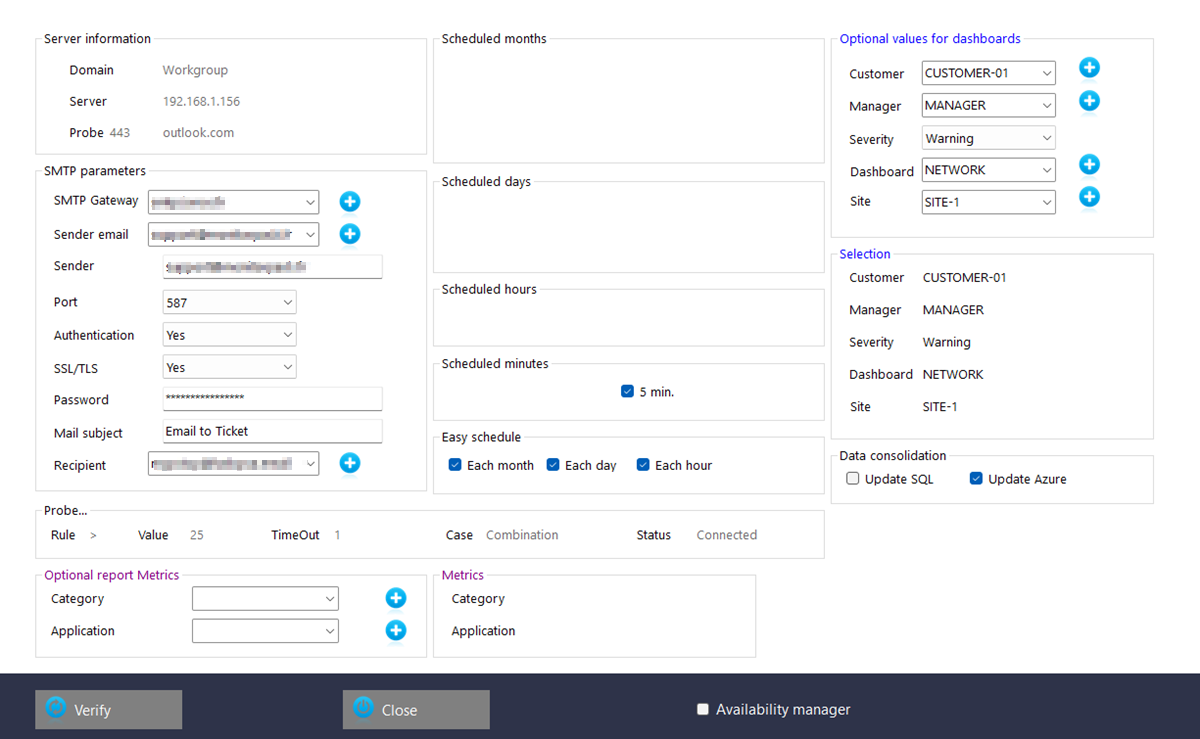
Incident generated from e-mail
Email exemple of autogenerated incident by Monitorpack that can be received per regular e-mail or used in all PSA solutions.
PSA Incident Management
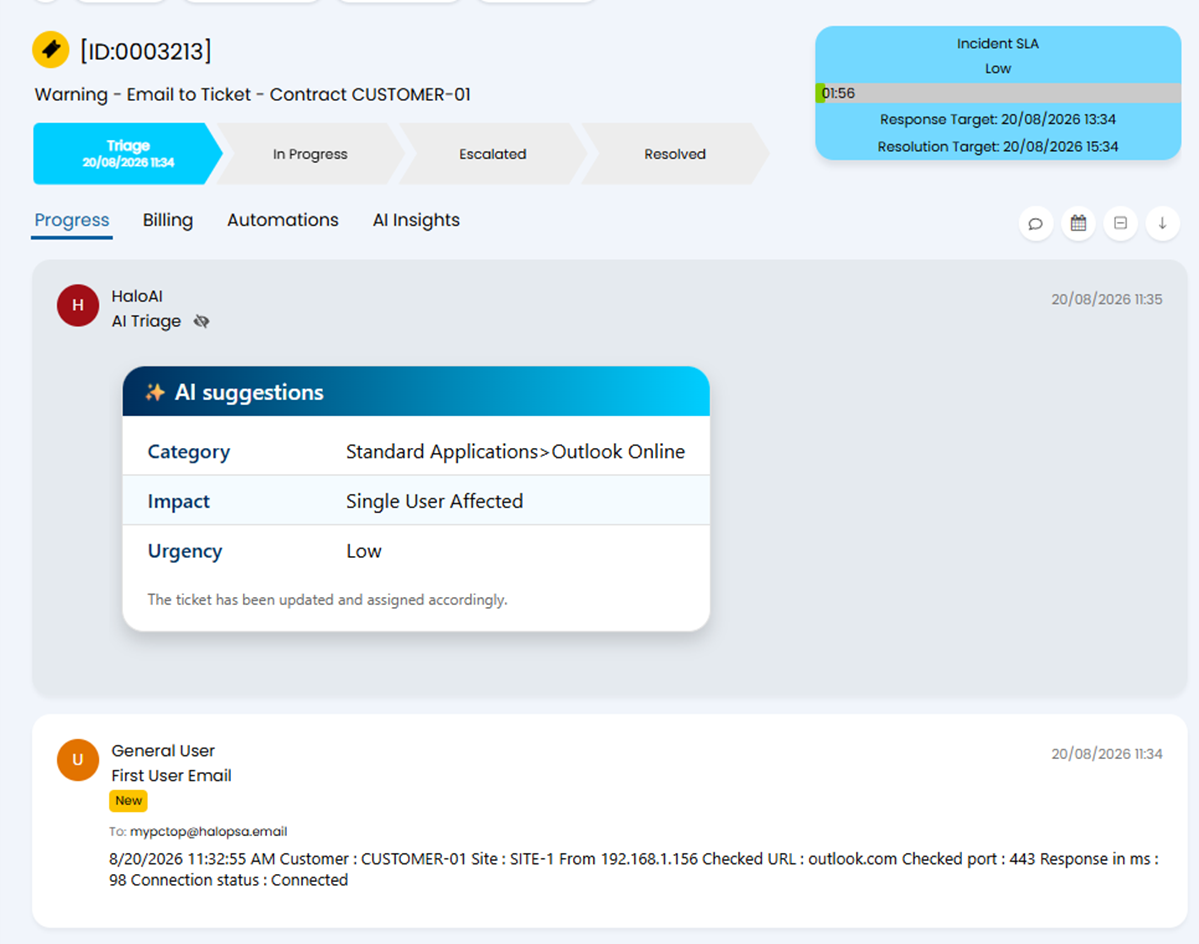
Halo - email exemple of autogenerated incident by Monitorpack.
PSA Incident Management
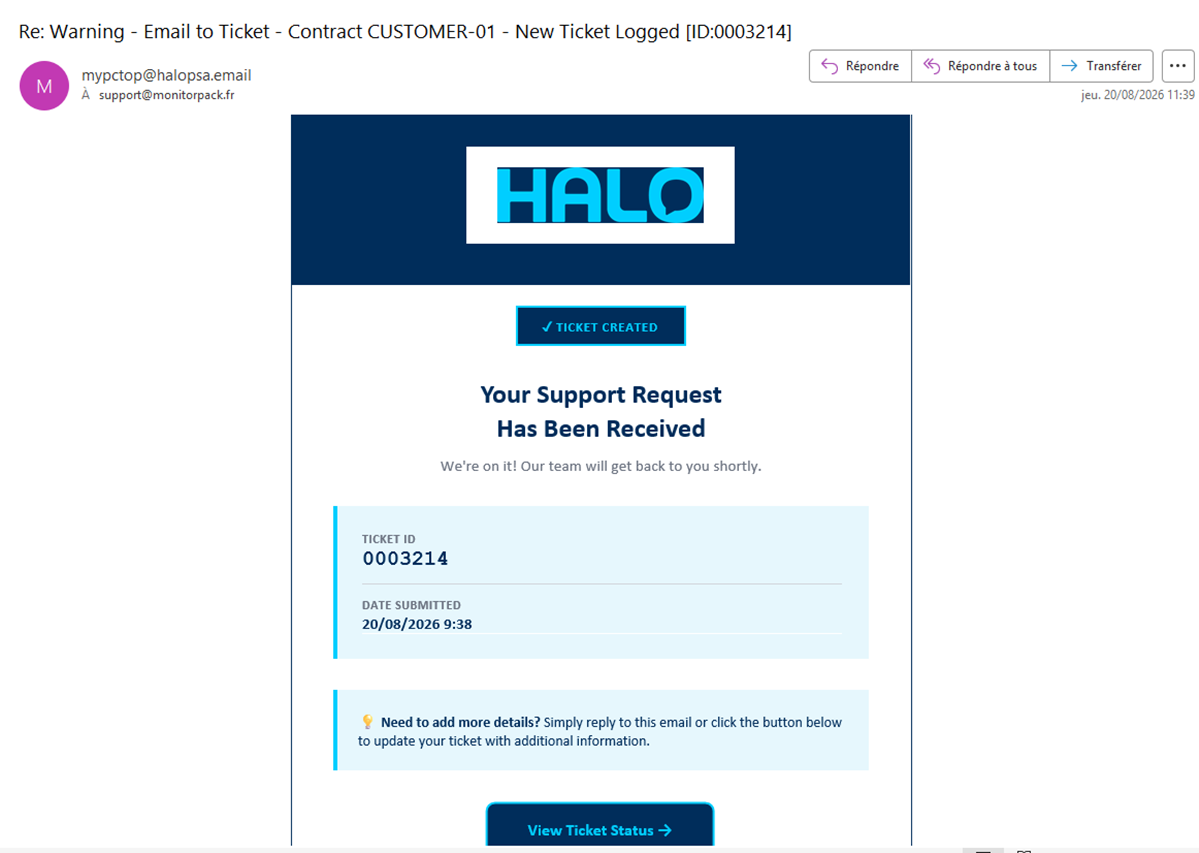
Halo - receipt exemple of autogenerated incident by Monitorpack.
PSA Incident Management
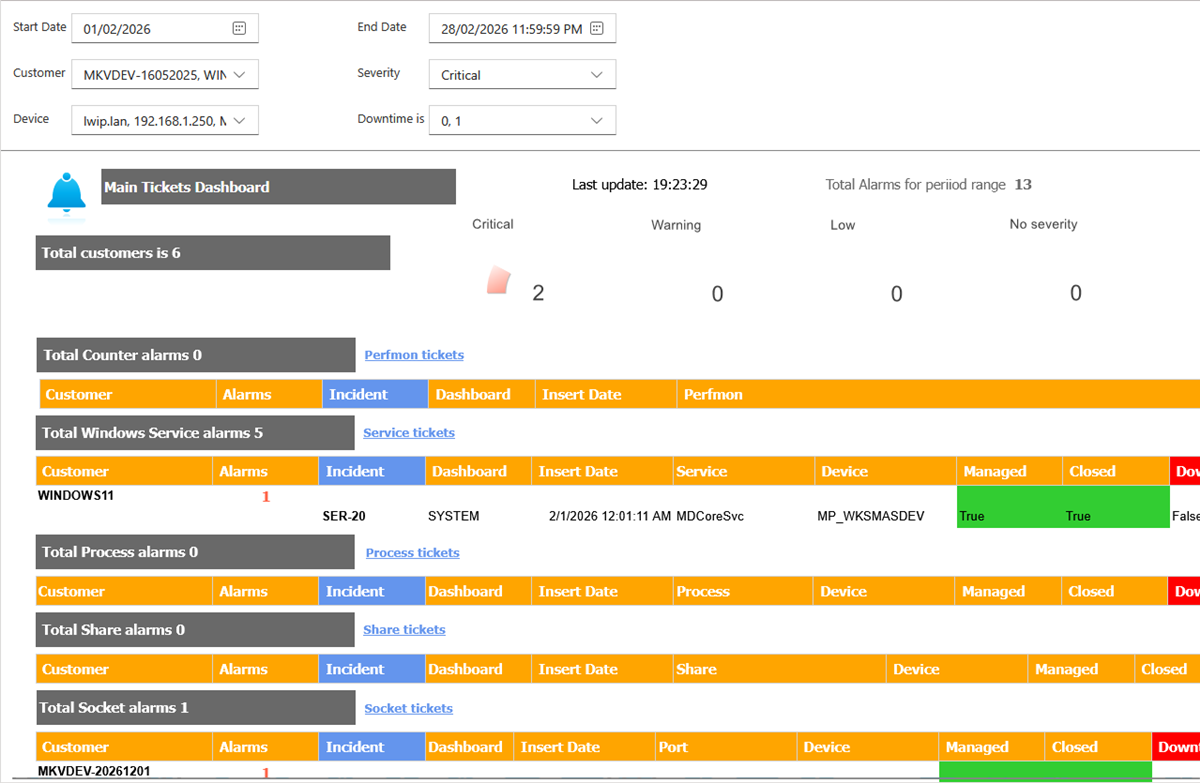
In any case, do not forget that Monitorpack Portal Cloud SaaS offer manages already your tickets.
PSA Incident Management
Email-to-Ticket Covers Nearly All Your PSA Ticketing Needs
This approach is not a downgrade. On the contrary, once the ticket is created in your PSA, you benefit from all the platform's native
features: categorization, prioritization, assignment, SLA management, billing, and more. The only difference is how the ticket is
created—via email instead of a complex API call.
By using simple workflows and rules that most PSAs offer, you can even automate severity management based on email content or route alerts to the right teams. It's a practical approach that lets you handle 100% of your incidents with outstanding efficiency, without the headaches of modern integrations.
Feature Comparison Table: Email-to-Ticket vs. REST API
| Feature |
Email-to-Ticket (Monitorpack) |
REST API (ConnectWise, Halo, Autotask) |
| Complexity |
Very simple – just send an email |
Very complex – tokens, JSON, endpoints, headers |
| Dynamic Updates |
Managed via simple business rules |
Everything must be coded, programmed, and tested |
| Maintenance |
Robust, not dependent on changing APIs |
APIs change frequently, requiring constant maintenance |
| Control |
Full control via your interface and rules |
The PSA provider controls the API |
| Security |
Simple and straightforward (email-based) |
Complex: OAuth2, keys, secrets, scopes |
Vendors integration
Monitorpack's Email-to-Ticket feature works with virtually all major incident managment platforms.
No complex API development required – just send an email.
ConnectWise Manage PSA PSA Zoho Desk Support Helpdesk ServiceNow Enterprise ITSM Salesforce Service Cloud Enterprise Helpdesk Freshdesk Support Helpdesk Jira Service Management Enterprise ITSM OTRS Open Source Helpdesk HappyFox Support Helpdesk BMC Helix Enterprise ITSM
All these platforms support email-based ticket creation – no API development required. but some of them are selling this option...
"Email to ticket" Workflow
|
 knowledge base